Discover the Majestic Architecture and Profound Serenity of Bhutan’s Sacred Sites.
Dzongs
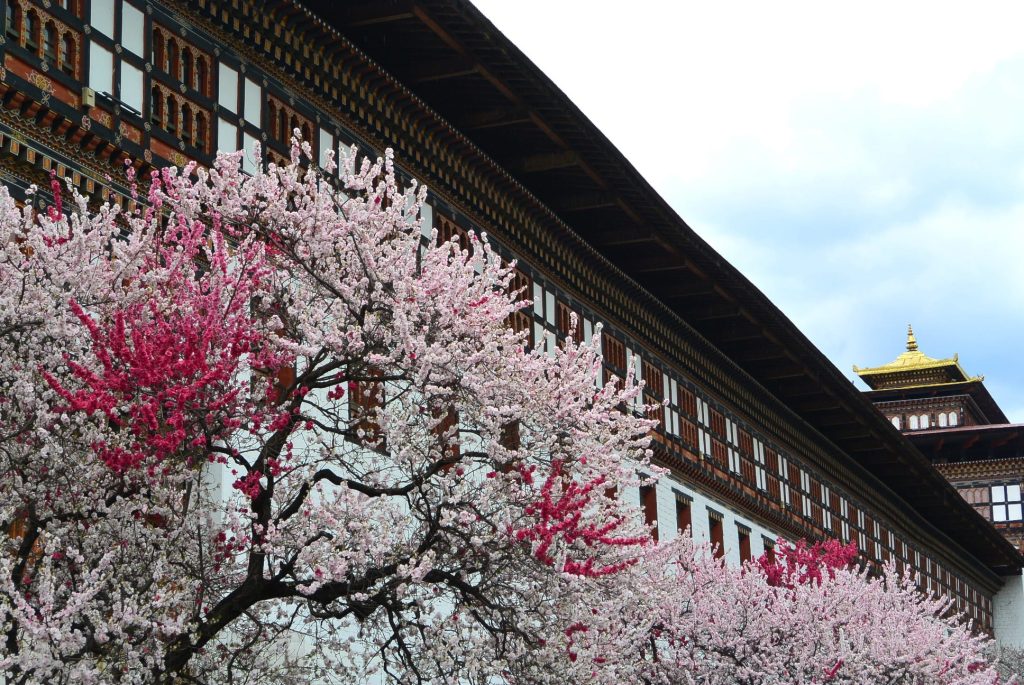
Tashichho Dzong
A majestic symbol of Bhutan, this 17th-century fortress is the heart of Thimphu. With golden roofs that shimmer at sunset, sprawling courtyards, and intricate woodwork, it’s a must-visit for culture lovers and photographers alike.
Thimphu Dzongkhag
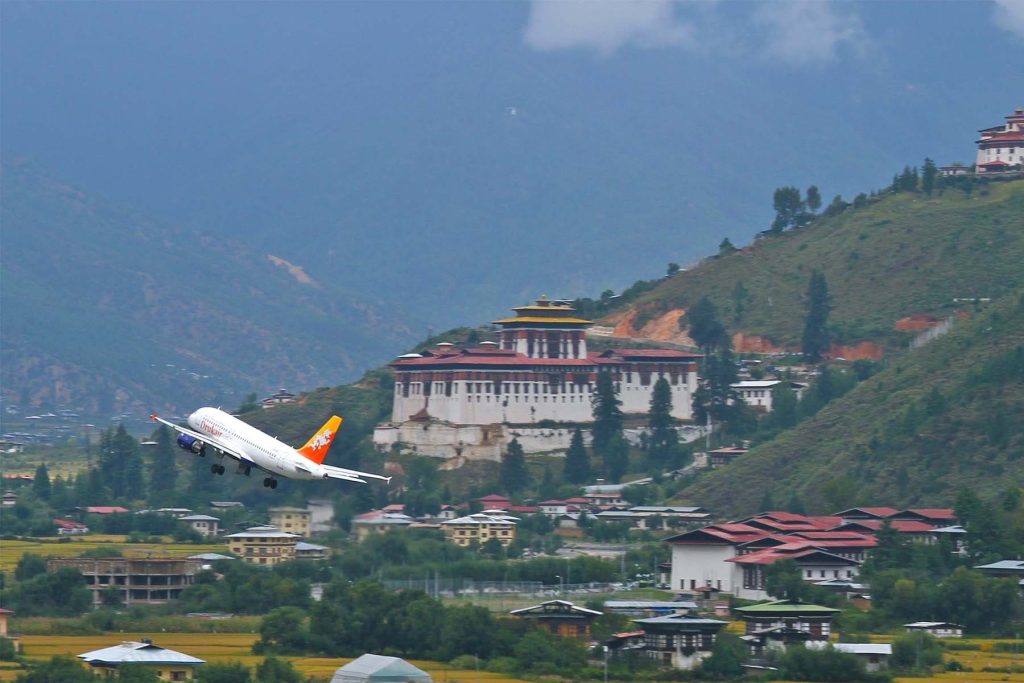
Rinpung Dzong
Perched above the Paro Valley, Rinpung Dzong offers breathtaking views and houses centuries-old murals and temples. A hub of festivities, it comes alive during the Paro Tsechu, where colors, masks, and traditional dances captivate every visitor.
Paro Dzongkhag
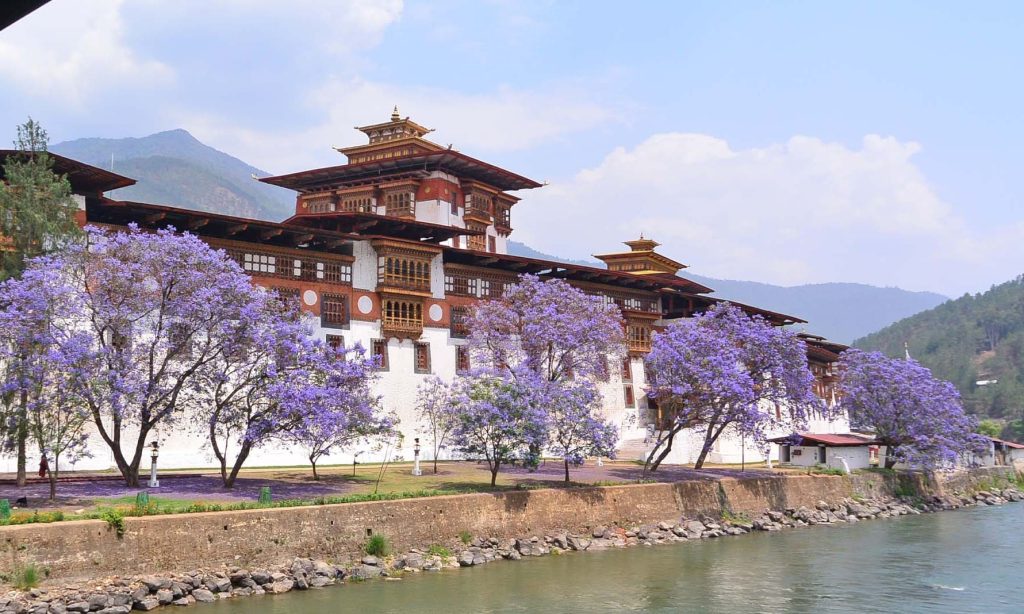
Punakha Dzong
Known as the Palace of Great Happiness, Punakha Dzong is considered Bhutan’s most beautiful fortress. Situated at the confluence of the Pho Chhu and Mo Chhu rivers, it is adorned with intricate woodwork and colorful murals. In spring, blooming jacaranda trees turn the fortress into a breathtaking sight, making it one of the most photographed sites in Bhutan
Punakha Dzongkhag
Trongsa Dzong
Dominating the central valleys, Trongsa Dzong is a fortress of royal heritage and strategic importance. Its terraced courtyards overlook the winding Mangde Chhu River, offering a perfect blend of history, architecture, and panoramic scenery.
Trongsa Dzongkhag
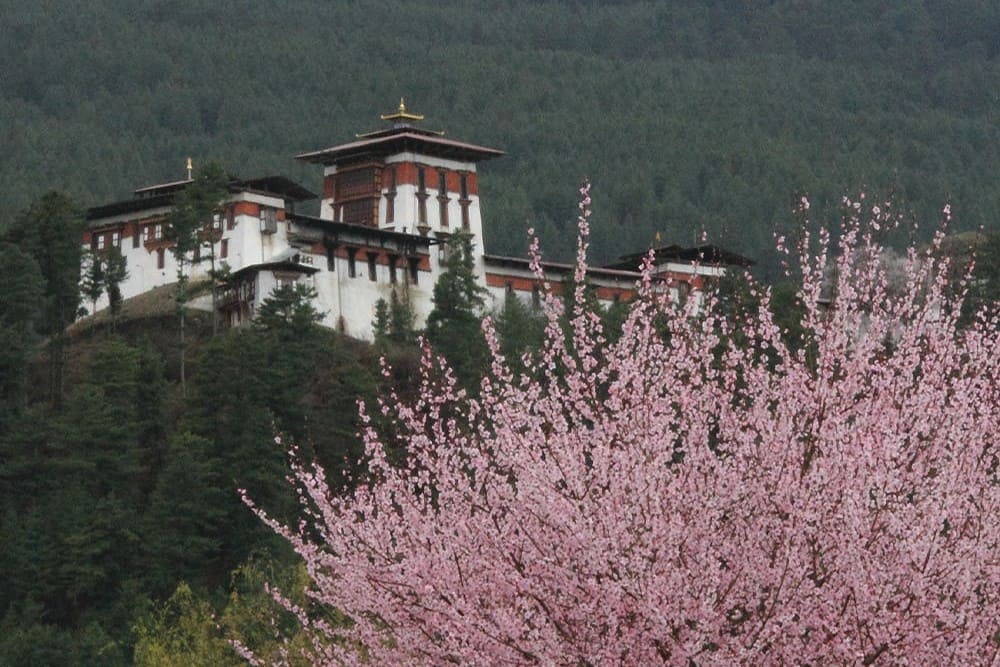
Jakar Dzong
The “Castle of the White Bird” rises gracefully over Bumthang Valley. With whitewashed walls, golden temples, and vibrant festivals, Jakar Dzong immerses visitors in the spiritual heart of Bhutan, surrounded by lush valleys and tranquil landscapes.
Bumthang Dzongkhag
Lhakhangs
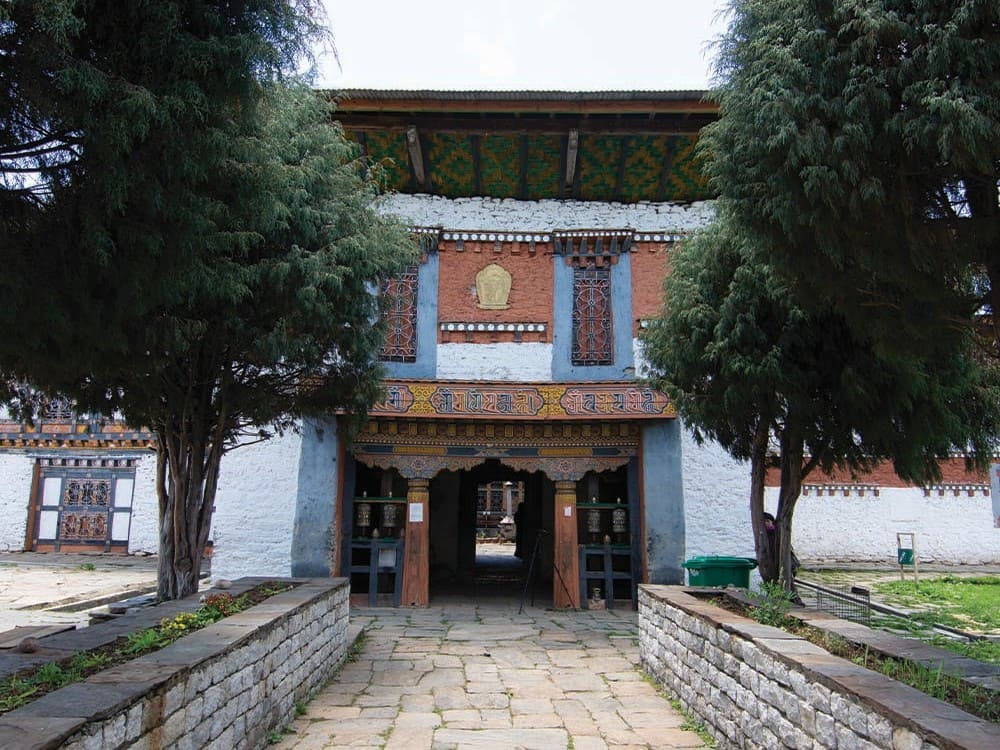
Jambay Lhakhang
This legendary temple is said to pin down a demoness, protecting the land. With vibrant festivals and historic architecture, it’s a fascinating glimpse into Bhutanese myths and spirituality.
Bumthang Dzongkhag
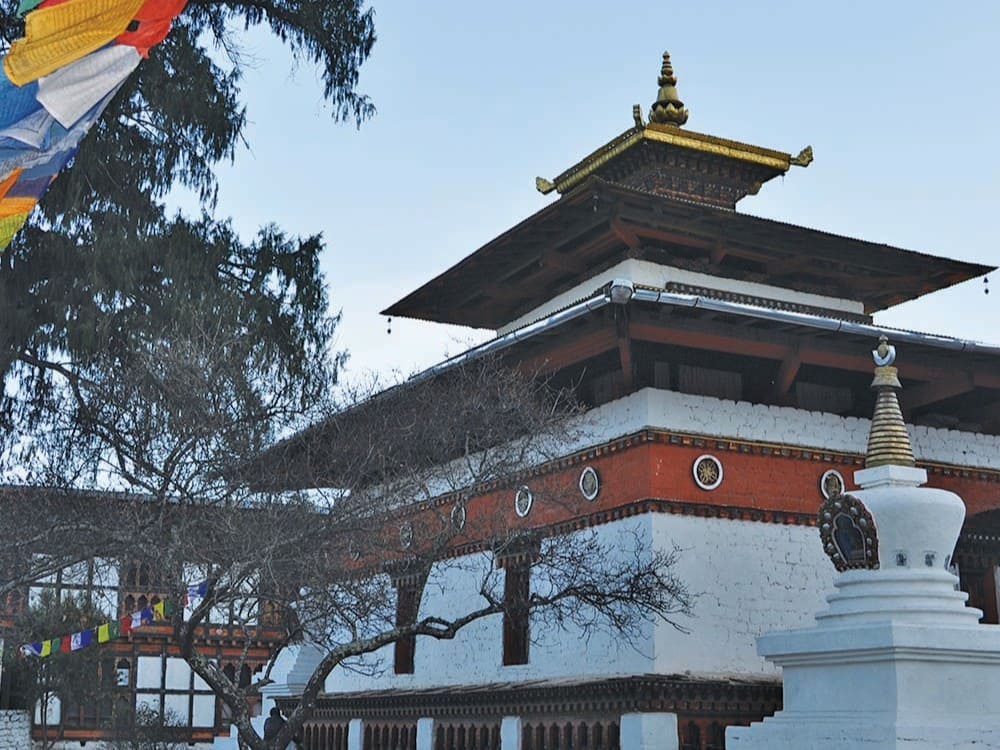
Kyichu Lhakhang
One of Bhutan’s oldest temples, Kyichu Lhakhang radiates peace and sacred energy. Built in the 7th century, it offers ancient murals, golden roofs, and a serene atmosphere perfect for reflection.
Paro Dzongkhag
Sangchen Dorji Lhendrup Nunnery
Perched on a peaceful hill, this nunnery offers stunning valley views and a serene spiritual atmosphere. Explore quiet courtyards, colorful prayer flags, and witness the daily rituals of the resident nuns.
Punakha Dzongkhag
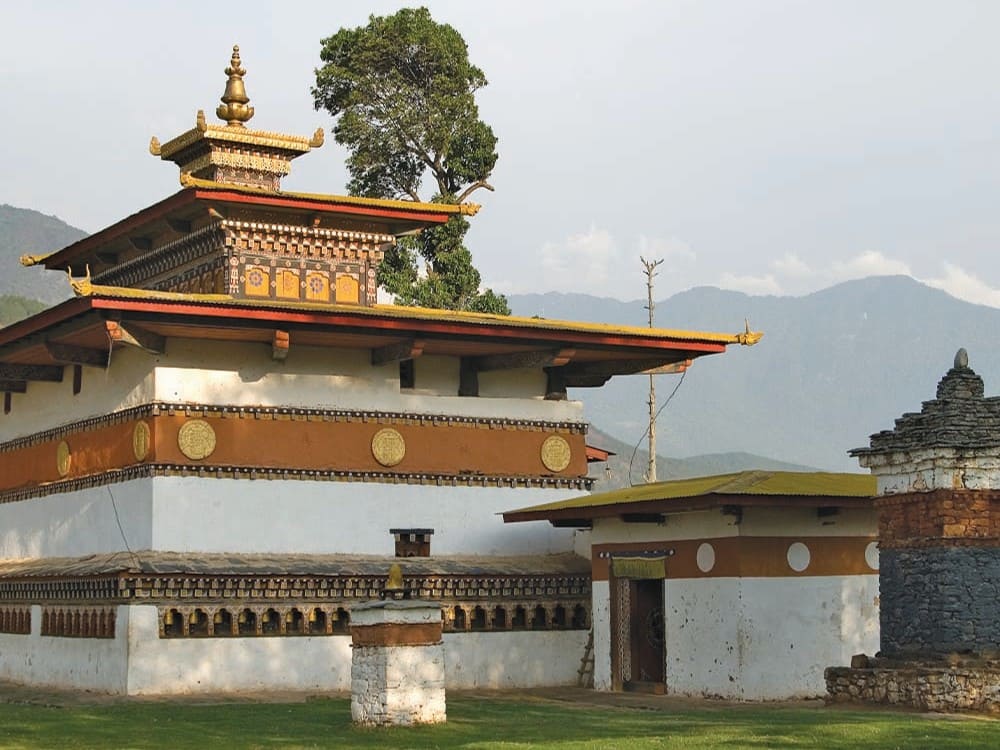
Chimi Lhakhang
Known as the “Temple of Fertility,” Chimi Lhakhang attracts couples seeking blessings for children. Surrounded by lush fields and colorful prayer flags, it’s a unique spiritual experience.
Punakha Dzongkhag
Paro Taktsang (Tiger’s Nest Monastery)
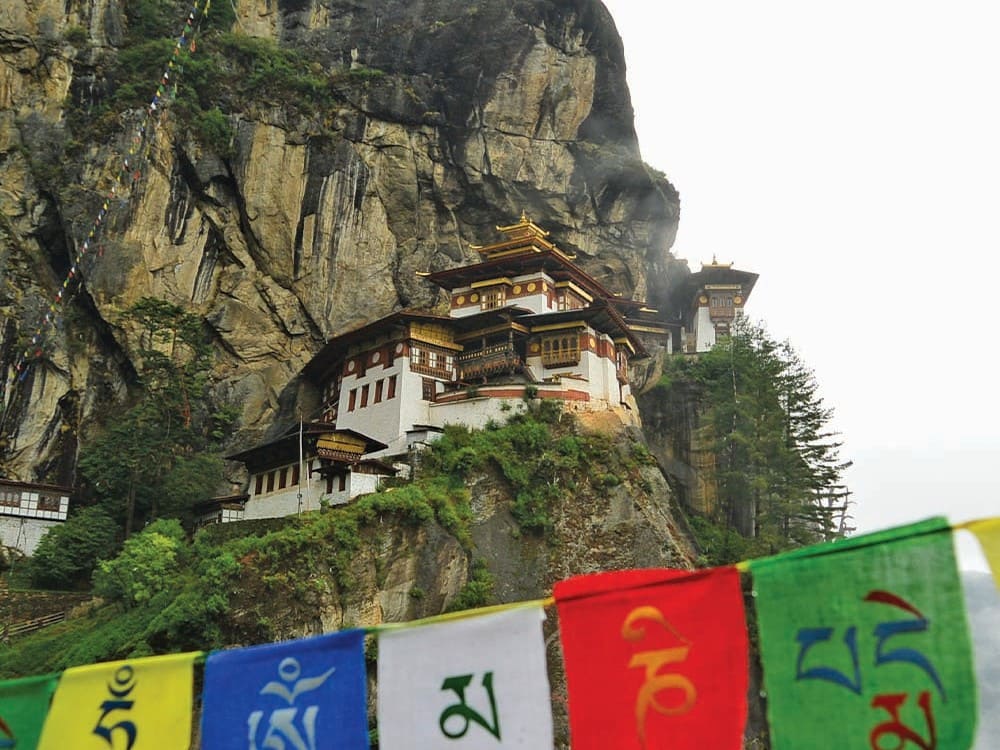
One of the most iconic monasteries in the world, Tiger’s Nest clings dramatically to a cliffside 900 meters above the valley. According to legend, Guru Rinpoche flew here on the back of a tigress. The challenging hike to the monastery is richly rewarding, offering travelers not only stunning views but also a deep sense of spirituality.
Cliffside, Paro Dzongkhag
Gangtey Lhakhang
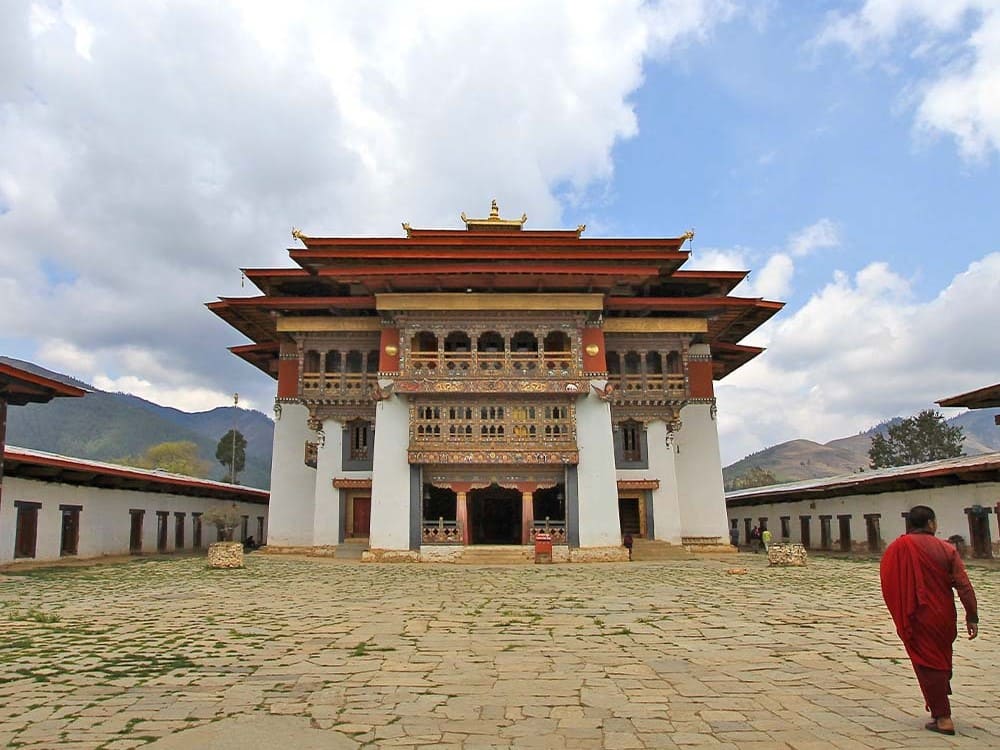
Overlooking the beautiful Phobjikha Valley, Gangtey Lhakhang is linked to the Black-necked Crane Festival. Its peaceful surroundings and intricate murals make it a serene cultural retreat.
Phobjikha Valley, Wangdue Dzongkhag
Takila-Guru Statue
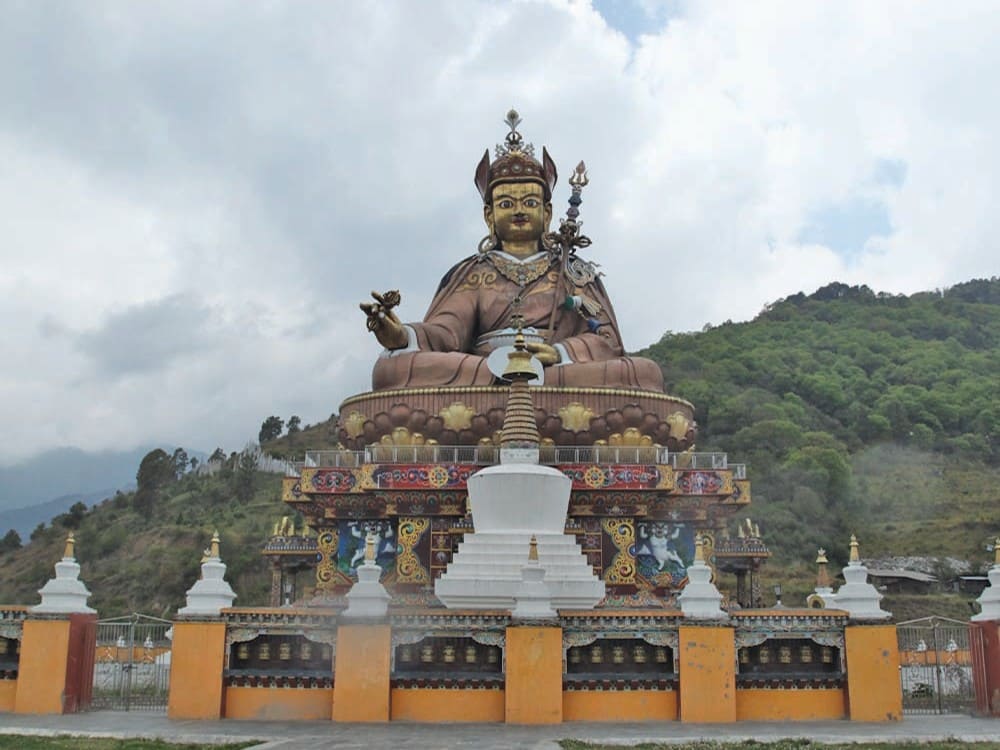
Perched on Takila Mountain, this sacred site features a towering bronze statue of Guru Padmasambhava and 108 surrounding chortens. Overlooking the stunning Tangmachu Valley, it offers a serene atmosphere, panoramic views, and a glimpse into Bhutanese spirituality.
Lhuentse Dzongkhag
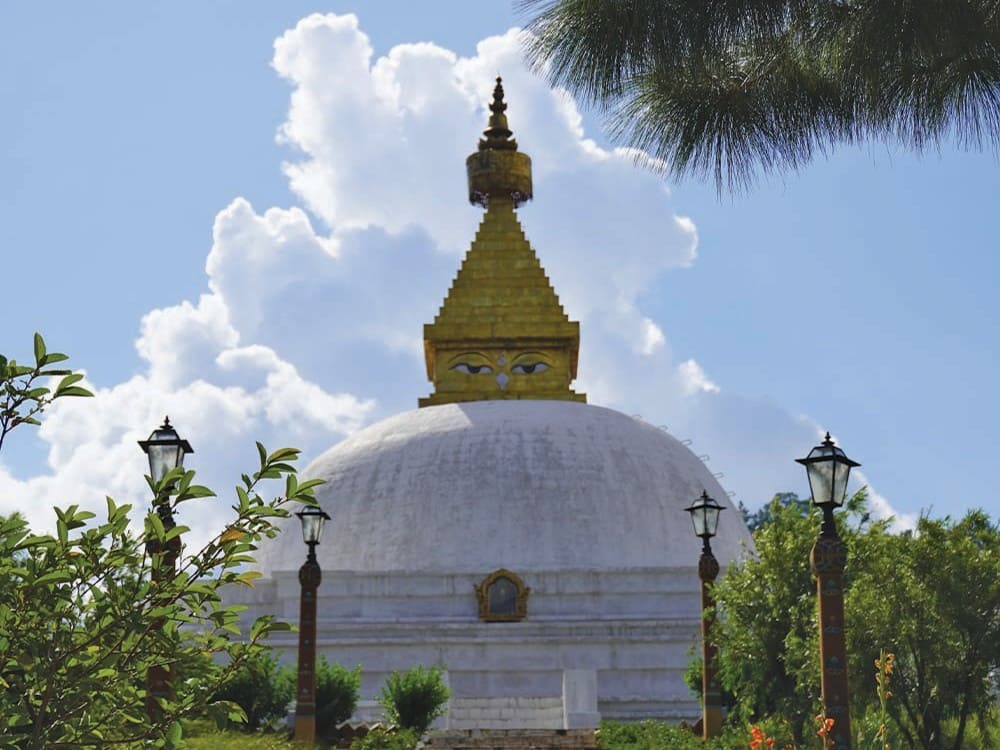
Khamsum Yulley Namgyal Chorten
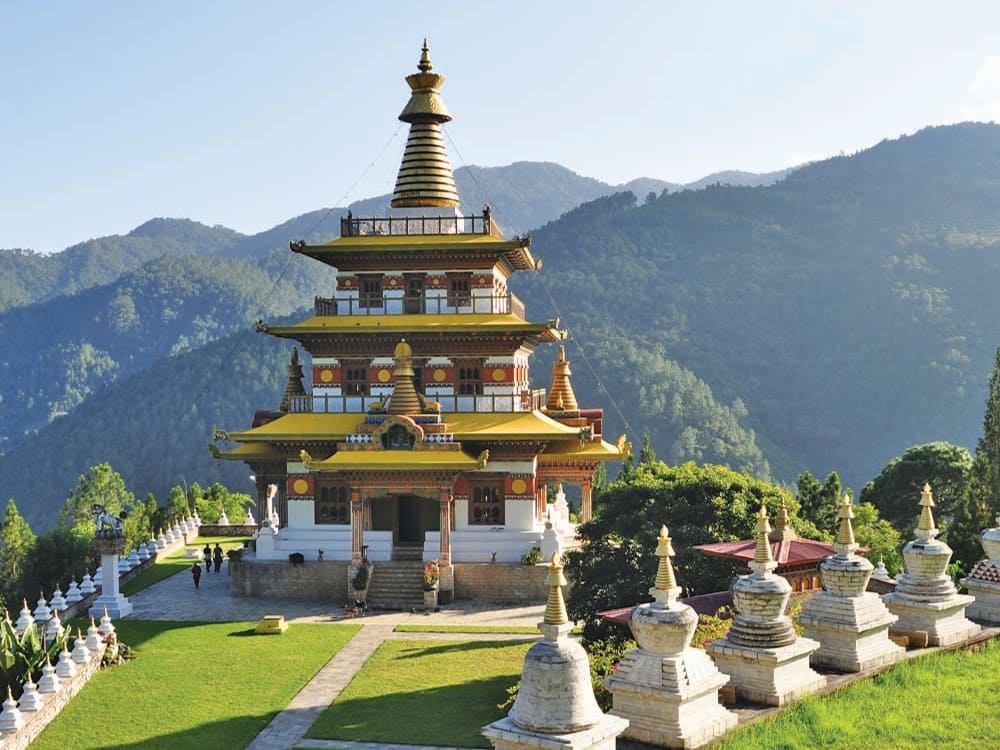
The Khamsum Yulley Namgyal Chorten is a magnificent, three-story tiered stupa located on a hilltop ridge overlooking the Punakha Valley in Western Bhutan. Commissioned by the Queen Mother, this modern structure was built according to sacred Buddhist texts to promote world peace and protect the country from negative forces. Travelers reach the site via a picturesque 45-minute to one-hour uphill hike through rice fields and forests, and are rewarded with spectacular, panoramic 360-degree views of the valley and the Mo Chhu (Mother River) below.